Monday, 27 February 2012

Mise en scene

The costume for our documentary was very important. I star in the documentary however I only ever introduce the venue we are at or I am interviewing and am not seen therefore we didn't feel my attire was extremely important. However the people who star in our documentary that we have interviewed, are all wearing the correct attire. The private school students are all wearing suits, the 5th year pupils from a state school are wearing uniform and the sixth form pupils from a state school are wearing their own clothing which outlines one of the differences we cover about uniform. It all works really nicely throughout our documentary, I believe it was important to consider the importance of uniform.


Sunday, 26 February 2012

Engaging our target audience


We believed our documentary could appeal to all ages. It is a subject in which would interest both children and adults. We include interviews with pupils as well as teachers so we get opinions and views of all ages. For our individual task we are creating a poster where we can advertise our documentary so this will attract a lot of attention if we go about it in the right way.

Also this idea that because our documentary is appealing to all ages, there is no restriction on who can watch it, therefore there is no worry for parents for instance about letting their child watch it. If anything it is educational.

I believe many people would be curious to see how our documentary portrays both a state and a private school so therefore this would be a big attraction for developing a larger audience.

Wednesday, 15 February 2012

Educating Essex


The first programme of the series joins Passmores School's deputy head Mr Drew on the front line of school discipline.
Dealing with emotional teenagers, enforcing detentions and maintaining the school's high standards - as well as teaching history - is all in a day's work for Mr Drew. Some love him, others love to hate him.
It's the last few days of term before Christmas and Mr Drew has more to contend with than a few snowballs in the playground. When a row over school uniform escalates, an accusation from a pupil threatens to derail his entire career.
SERIES SYNOPSIS
What is life really like for today's students and teachers? This series has unprecedented access to an English secondary school to follow a group of GCSE students, and the staff who teach them, as they face the most important year in their education.
Passmores School in Harlow, Essex, is a successful school in a challenging area. Under headteacher Vic Goddard, it's been awarded Academy status and is rated 'outstanding' by Ofsted.
The school has been rigged with 65 fixed cameras - from the corridors to the canteen, and from the headteacher's office to the detention hall - to reveal every detail of daily life.

I found it was important to watch documentaries that relate to our final piece as we can take bits that work well to develop our work. We are in the process of editing so watching documentaries such as these help, even if they are small things, it just helps to get those extra ideas.

Monday, 13 February 2012

Archive footage

To make our documentary more interesting and appealing to others we are going to include some archive footage. After doing some research we came across some really great footage that relates really nicely in to our documentary. We feel that including this footage will allow our documentary to have that extra something, it is always good to hear some other opinions on the same kind of topic rather. I feel this will give our audience more to talk about and when it comes to feedback, hopefully we will get some positive stuff!

Saturday, 11 February 2012

Our day filming at Reeds School

Due to our change of plan, Adam, Nick and I took the day to film at Reeds School. This was a very successful day of filming as we captured everything we needed in order to make our documentary as successful as it possibly could be.
We got to Reeds for 10am where we were introduced to Mr Michael who had kindly arranged the day for us. We met one of the sports coaches who was more than helpful. It was great talking to him as he like myself has experienced both life at a state school and a private school. He took us around the sports department and showed us the sporting facilities which we found was one of the main differences between state and private school.
We were also allowed to sit in on a history lesson which was great as we got a real feel for their ways of teaching and the ways in which the children responded and got involved in lessons. All the children were very well behaved and took part in the lesson activities. They had a friendly and practical approach to teaching which was apparent the children enjoyed very much.
We sat in on a gym session as well as two students playing tennis. This was great as it in our documentary their is a clear contrast in the facilities.
Speaking to the sports coach whom had attended both private and state schools was very interesting, his view was that he feels you get what you pay for when you come to a private school, the sporting facilities and matches that take place in every sport at the weekends, the top athletes get one on one sessions with coaches which was a real benefit. However if students are determined to succeed they can do just as well at a public school if they are motivated to do so. I very much believe this is the case. From being at St Georges, I was very privileged to enjoy such wonderful facilities however now being at Heathside, I feel that as an individual student I have improved the way I work, I am much more independent in my studies which I feel is also another big comparison between the two. I feel at private schools, you are chased to do your work where as at a public school it is much more independant. This could be seen as good or bad from different perspectives, however it has to be considered that later in life when you are put in to the deep end or in later education at university, the majority of the work is off of your own back and you are forced to be independent.
At Reeds, we also got a chance to have some one on one interviews with the students of the sixth form, they seemed to love where they were and what they were doing. Another difference between a state and private school was the way in which in free periods the students at a private school are made to study where as public schools have the choice to study or go out in their free periods. Again, this comes back to the independence and motivation of you as an individual.
I very much enjoyed our day filming at Reeds, it gave us a  much clearer insight in to what the real differences were.
Over half term our group needs to edit our final outcome together to produce the best possible result for our documentary.


Above are some of Reeds GCSE results from previous years, these will be something which we include in our documentary to highlight some of the key differences.

Tuesday, 31 January 2012

Ancillary Task- Poster


For our individual ancillary task I decided to do a poster. For this I needed to consider carefully what to include in order to make it a successful piece of work. I needed to think about how I was going to design my page and the variety of fonts and text sizes I was going to use. Colour was important as it makes it much more exciting and easy to read.  I also needed to consider the appropriate language to use as it was important to use media terms throughout. Use of pictures that were related to my topic were important to use as it broke up the text as well as added something interesting for the readers to look at. A variety of camera angles throughout our documentary were important as it allowed the audience to have a different perspective on certain things.


Our archive footage in which we included in our documentary was important to include in my poster as it shows the statistics of both schools and their exam results.
Pictures of uniform and facilities were very important to include as they were some of the main differences.

Friday, 27 January 2012

Jodie Marsh - My Secret Past


Throughout the development of our A2 course, I felt it was important to continue to watch documentaries. Not only because they are interesting and entertaining to watch but I felt it was a good idea to get as many ideas as possible. It gave my ideas on interview techniques and particular camera angles. 


This documentary in particular was a very touching and very personal one as it was based on the topic of bullying and the extent of tragic damage it can do. I felt in some ways it could relate to our documentary topic as a lot of bullying takes place at school. Glamour model, reality TV star and body builder Jodie Marsh tells the full story of what effect bullying had on her and how it has made her the person she is today. Jodie faces up to some uncomfortable memories from her time at school. It is an emotional journey that sees her exploring beyond the boundaries of her native Brentwood to uncover the true extent of bullying and its impact on its victims. When Jodie was at primary school her nose was broken during a hockey match. At secondary school her crooked nose was crooked became the subject of bullies’ taunts. Constant verbal abuse led Jodie to contemplate suicide and caused her parents to offer her a nose job when she was 15. It made no difference and the bullying continued until her parents removed her from school. With her own personal experience in mind, Jodie connects with some of today’s young victims of bullying. How does it affect them and what support do they receive? How do schools deal with bullying now compared to when Jodie was at school? Is their approach effective? Jodie knows that bullying experienced at school can affect people for the rest of their lives, and she wants to help others recover from the psychological damage more quickly than she did.


It was an amazing documentary and was extremely sad to be able to witness some of the effects bullying has, even later on in life. On the channel 5 website people were able to leave feedback about the documentary which was very interesting to look at. 


Change of plan!

Unfortunately along the way of our filming we had a few problems. After doing our filming and interviews at Heathside school, it was time to move on to filming at our private school, which we had chosen to be St Georges College. We called up St Georges in order to ask for permission to film but unfortunately their policies didn't allow us to.
Our new chosen private school is Reeds School, which is based in Cobham and has beautiful grounds. Our filming will take place there next week as we need to film the grounds and do some interviews in order to complete our documentary.


Thursday, 12 January 2012

Planning for double page spread

Magazine Article- Group ancillary task


For our group ancillary task we are doing a magazine article. Doing this presentation allowed me to get more of an insight in what to include. Doing a magazine article will be good for our documentary as we will need it to be appealing looking as well as including the right text to attract an audience. We thought our magazine article would be effective if it was based around exam results or the stress of pupils as this would be appealing to both old and young people. It wouldn't just be something the pupils themselves are interested in, it would also be very appealing to parents and teachers. 

Monday, 9 January 2012

Filming Interviews


The clip above is part of our filming process. We believed it was crucial to include interviews in our documentary as the audience can really relate to them. The interview between Nick and myself was important as I have attended both a private school and a public school so the audience can clearly listen to my point of view and my opinions. The positioning of Nick and myself worked well as we could clearly listen and speak to one and other. The audience could also clearly see what was going on. We made good use of the 180 degree rule. The questions within the interview flow nicely allowing the audience to get a good understanding of our opinions.   

Wednesday, 7 December 2011

Interviews

Analysis Of Documentary Process

In class we looked upon our documentary and evaluated what was
the successful and what needed improving when looking at making
the final documentary.  

One Shot
Camera Angles: During the interview filming
we used the camera angle 'two shot' as this clearly
showed to the audience the interviewer and the 
interviewee, which also showed reactions. 
This is an appropriate shot to use in the filming
of our main task,equally effective would be a one 
shot but with a voice-over with the questions
so the focus is on the interviewee. 
PreviewTwo Shot 

We also worked an the opening/introduction to our documentary. 
We decided we would use sped up video of the route of the car
journey heading into both the private school and public school.
After filming the footage we decided it was an effective way of
showing a clear difference between the two. The camera angle used
was a panning shot used through the windscreen of a car. 

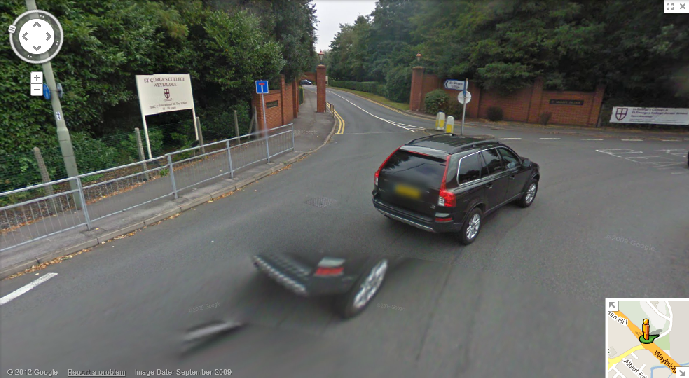
Here are the two screenshot from Google Maps of the route we took
and the entrances to the
public school (Heathside School) and the private school (St Georges College)
St Georges College 

Heathside School

Tuesday, 6 December 2011

Documentary Process so far : Analysis

In class we looked at the process of our documentary so far, what was successful and what wasn't successful. We looked at things we need to improve to make our documentary everything we need it to be.

The camera angles we have used so far and why: We've used two shots for interviews, this worked really well as both the person being interviewed and the person interviewing were in the shot. This allowed the audience to get a full perspective of what was being spoken about.

We've created a really good opening for our documentary. We filmed the journey in to school to both St Georges and Heathside. This was really effective as there was a massive contrast between the two. The camera angle used here was a panning shot as it sets the scene for the documentary.

We took lots of long shots when filming the facilites to get a full view of them all.

Close ups throughout our documentary also worked really well as they emphasized certain things we filmed.

We researched some interviewing and questioning techniques, this worked to our advantage as we got a good idea of what would work well in our interviews included in our documentary

Our documentary takes the forms of observational and participatory. Our group members get involved with the documentary allowing the audience to really understand and get involved with the documentary themselves.

We chose to do a magazine double page spread, this task is done individually. We also are doing an advertising campaign as a group based around our documentary.

Our documentary targets a varied audience. The aspects included in our documentary target all ages as a lot of issues are covered.

We've made our documentary different and interesting by including many different aspects. We have included several interviews throughout which works well to keep the audience interested, it also breaks the documentary up nicely. We have also including statistics in our documentary as the statistics support our arguement in the documentary.

We've worked well together as a group, our group is organised and we are up to speed with the process of our documentary. We have aimed to take on  individual duties so our final outcome is the best it can be.

It would be good if we could get together more outside of school and do some work as a group as we need to stick to deadlines.

We are going to include archive footage in our documentary such as pictures and newspaper articles. This will be effective in the outcome of our final piece.

Tuesday, 29 November 2011

Interviews

In class today we filmed our interview with myself being asked the questions. We did this as I could give a perspective on both a private school and state school. The interviews worked really well as we asked a wide range of questions that really bring together our documentary. We also interviewed Miss Donovan as she could also give us a point of view from both sides. We are going to St Georges College next week to film a few interviews with teachers there and to get some more footage of the school itself, mainly the facilities as there is a massive difference between the two. Types of questions included were:

  • Is there a massive difference between the facilities at the two schools? If so what are they?
  • Do the pupils have a different attitude to learning?
  • Is it worth the money you pay to be educated at a private school?
  • Does the uniform in sixth form effect attitudes to learning?
  • Is the teaching standard the same? 
  • What does a typical school day consist of?

Monday, 28 November 2011

Planning our interviews

We have decided to include various interviews in our documentary in order to break our documentary up as well as include different points of views on a state school and private school.
I am being interviewed in our documentary as I used to go to St Georges College in Weybridge so I have experienced both a state school and private school and what life is like at both. I will be able to unravel some of the differences and similarites from both schools.
We are also including interviews of several teachers and we can pick and choose the best bits to include in our final outcome.
During our interviews we also have to consider the different camera angles. This will provide the audience with a more interesting documentary to watch as we will not just stick to one camera angle. Possible shots we have considered are: Two Shot, Close up, Long Shot, Zooming in and out to create a bigger picture. Specfic camera angles will also allow the audience to follow the story line more clearly.

Tuesday, 22 November 2011

Development for magazine article


Doing this presentation helped with deciding what to do for our group ancillary task. Looking at different examples and annotating them really helped me. It also gave me a chance to look at different lay outs and images that will relate and go well with our magazine article. We also need to think of a good story line in which will capture the readers attention. We will need to think of things such as font and colour and the effects of them. 

Thursday, 17 November 2011

Public vs Private


In order to get a good idea for exactly what we were going to do and what we wanted to achieve, I created a powerpoint to show what we were going to do, the roles everybody has, how we are going to make it unique and what audience will our documentary interest? It was very useful doing this powerpoint as it will help in our developing and progress of our documentary. 


Tuesday, 15 November 2011

Location shots of Heathside school


 In preparation for our final piece we took some location shots of both schools we were basing our documentary around. This really helped as we were able to develop and edit some of our ideas for our final outcome. It also allowed us to see some of the major comparisons between each of the schools.

Playground area

Sports fields

Long Jump

Netball/Hockey/Basketball/Tennis/Football court

Rugby field


Monday, 7 November 2011

Our Final Idea

For our final piece we have decided to look at the comparisons between a state school and a private school. The school we have chosen for our state school is Heathside school in Weybridge and the private school we have chosen is St Georges College in Weybridge. This will work well for us when it comes to filming as both schools are very local. In our final piece we are going to look at the facilities, uniform and the students and teachers, which will include interviews. The final conclusion will prove or dis prove the asumption that private schools achieve higher GCSE results than state schools.